Aliyev praises strategic ties with Washington as relations reach new plateau
President Ilham Aliyev has told a visiting US senator that Donald Trump played a singular part in fostering peace between Azerbaijan and Armenia, while bilateral ties have reached strategic partnership level.
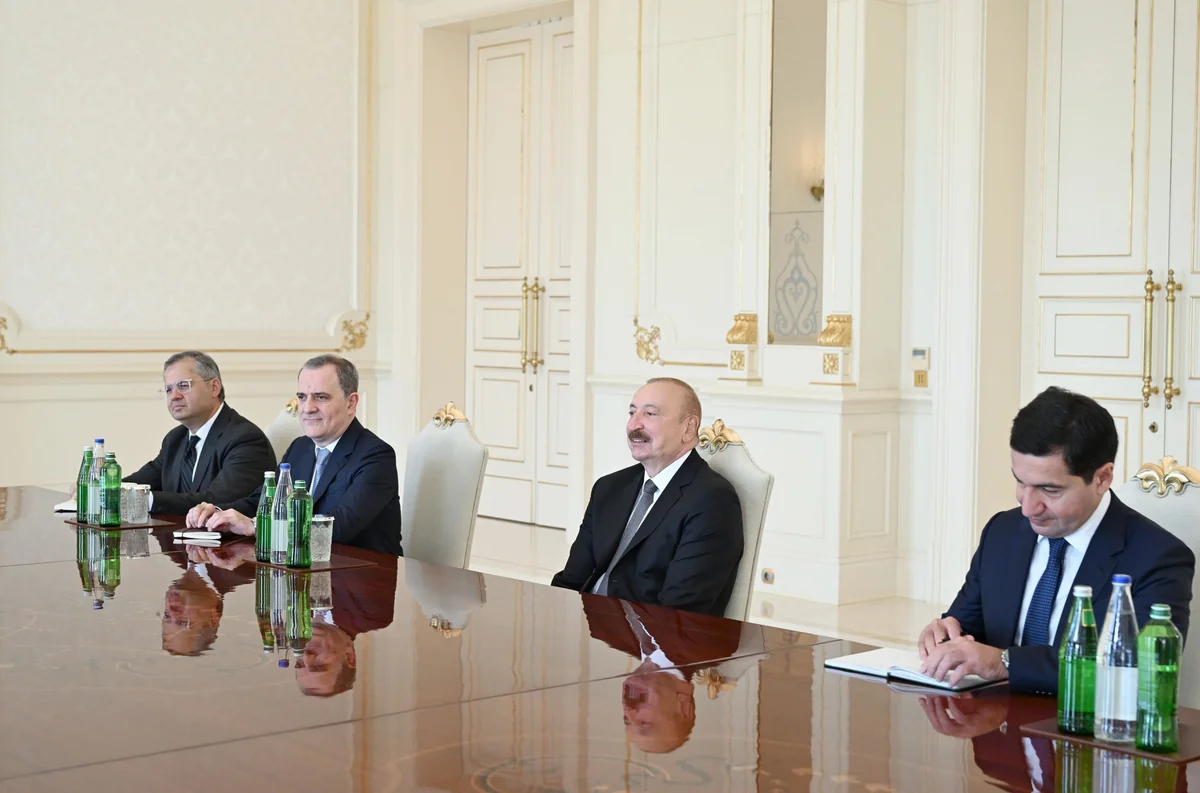
President Ilham Aliyev of Azerbaijan has singled out Donald Trump's personal engagement as a decisive factor in advancing the fragile peace process between Baku and Yerevan, remarks delivered during a meeting with a senior Republican senator that also showcased the warmth of their bilateral relationship. Speaking in the course of talks with Senator Steve Daines, the Montana Republican who chairs the Subcommittee on Europe and Regional Security Cooperation within the Senate Foreign Relations Committee, the Azerbaijani leader emphasised that the US president's involvement had been exceptional in propelling the conciliatory agenda between the two South Caucasus neighbours, whose protracted conflict over Nagorno-Karabakh has haunted regional stability for decades. Aliyev went on to stress that his own rapport with Trump remained exceptionally strong, a personal dynamic he characterised as operating at an elevated level of mutual understanding, before turning to the broader trajectory of Azerbaijani-American relations in the wake of Trump's return to the White House for a second, non-consecutive term. It was his assessment, according to accounts of the meeting, that bilateral ties had progressed with conspicuous success since the inauguration, built upon foundations of practical cooperation and reciprocal trust that had only strengthened over the intervening months. The president's observations carried particular resonance given the fraught history of US-Azerbaijan relations, which have at times been complicated by Congressional concerns over human rights and by the competing geopolitical interests of regional powers, yet Aliyev portrayed the current phase as one of unaccustomed harmony and strategic convergence. He went so far as to characterise the relationship as having attained the status of a strategic partnership, a designation he argued carried profound significance not merely for the two signatory nations but for the wider neighbourhood stretching from the Caspian to the Black Sea. Senator Daines, whose committee portfolio grants him considerable influence over Washington's posture towards European and Eurasian affairs, listened as Aliyev elaborated on the tangible benefits of this elevated partnership, which encompassed energy security, economic collaboration, and mutual support within international fora. The meeting, which unfolded against the backdrop of ongoing trilateral discussions involving Brussels and Moscow regarding the normalisation of Armenian-Azerbaijani relations, appeared designed to signal Baku's satisfaction with the current American administration's approach to the region, a marked contrast to the more critical tones sometimes adopted by previous US governments. Aliyev's decision to foreground Trump's personal role was notable in that it went beyond the standard diplomatic courtesies, suggesting a genuine belief in Baku that the president's unconventional style and willingness to engage directly with autocratic leaders had unlocked diplomatic momentum that more traditional statecraft might have failed to generate. Observers have noted that Trump has previously expressed interest in brokering a comprehensive settlement between the two former Soviet republics, viewing the issue through the prism of great-power competition and American strategic interests in diversifying energy supplies away from Russian dominance. While the details of any specific Trump initiative remain opaque, Aliyev's public endorsement serves to reinforce the narrative that Washington's current occupant retains both the inclination and the personal capital to influence outcomes in a region where Russian peacekeepers have maintained a precarious presence since the 2020 ceasefire. For his part, Senator Daines offered no public rebuttal to the Azerbaijani leader's characterisation, and the tenor of the exchange suggested a convergence of views on the desirability of continued American engagement in facilitating dialogue between Baku and Yerevan. The broader significance of Aliyev's remarks, however, may lie less in their substantive content than in their timing, coming as they do at a moment when European mediators are seeking to revive stalled negotiations and when Armenia's leadership has signalled cautious openness to further concessions in exchange for border security guarantees. Whether Trump's purported role will translate into concrete diplomatic deliverables remains an open question, yet Baku's leadership has clearly calculated that publicly associating the American president with the peace effort enhances the legitimacy of the process while simultaneously deepening the strategic partnership that Aliyev so enthusiastically invoked. As the meeting concluded, it was evident that Azerbaijan's foreign policy establishment views the current window of American engagement as an opportunity to be seized, with Aliyev's carefully calibrated praise of Trump serving both as a diplomatic courtesy and as a strategic signal to other regional actors that Baku's ties to Washington have rarely been more robust. The coming months will test whether this professed alignment can withstand the inevitable frictions of international diplomacy, but for now, the Azerbaijani president has left little doubt about whose influence he considers indispensable to the pursuit of lasting peace in the South Caucasus.